Coordinated Earthwork for Commercial Construction Projects
Commercial Excavation Services in Manassas for contractors and property owners managing construction, redevelopment, and site improvement projects
Commercial projects require excavation that coordinates with multiple contractors, tight timelines, and site conditions that affect how quickly construction can proceed once earthwork is complete. JM Excavating provides excavation, demolition, land clearing, drainage solutions, wet utility trenching, foundation prep, and site preparation for commercial construction and redevelopment projects across Northern Virginia. The work focuses on establishing correct elevations, managing site access so trades can move equipment without delays, and sequencing excavation with utility installation and foundation phases to keep the project on schedule.
Commercial excavation differs from residential work in scale, coordination requirements, and the need to maintain access for concurrent trades working on adjacent areas of the site. Projects often involve excavating while existing operations continue nearby, which requires deliberate planning around traffic patterns, dust control, and staging areas that don't interfere with active business or construction zones.
Discuss your project plans and request an estimate to review excavation requirements and coordination with your construction timeline.
What Proper Sequencing Requires on Commercial Sites
Excavation sequencing determines when earthwork happens relative to utility installation, foundation construction, and site access improvements, which directly affects whether subsequent trades can begin on schedule or wait for rework caused by incorrect elevations or unstable ground. The work includes reviewing site plans to identify conflicts between excavation zones and utility corridors, coordinating with engineers when unexpected ground conditions appear, and adjusting the excavation approach to accommodate changes without delaying the overall construction schedule.
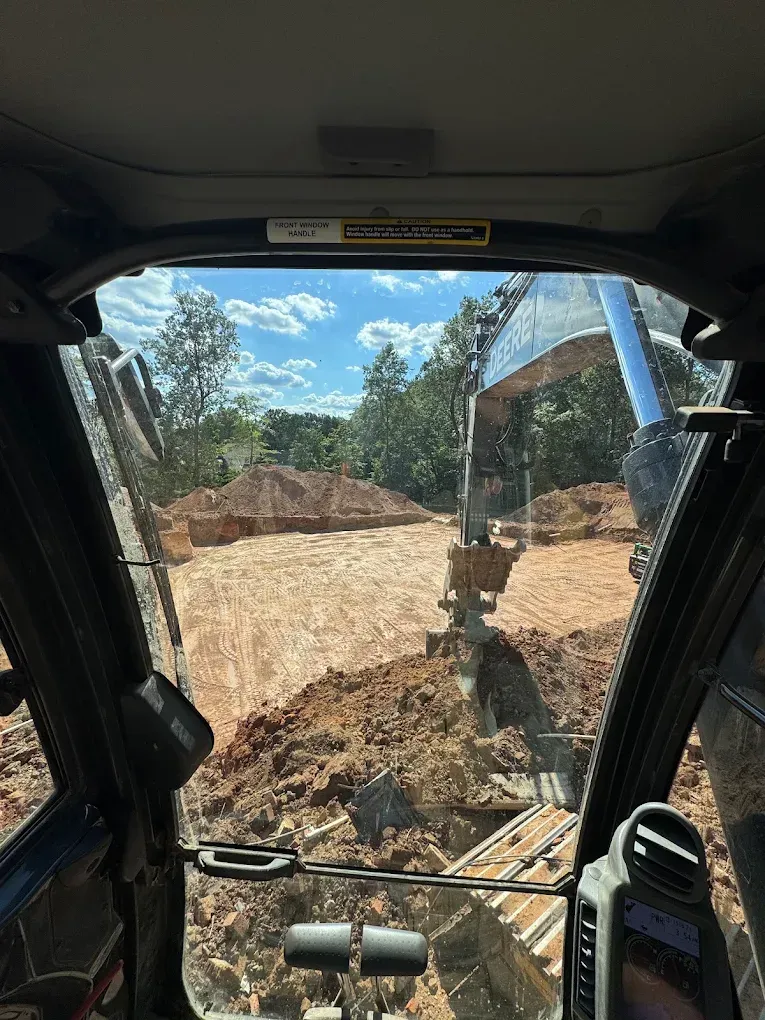
Once excavation is complete, the site transitions to a construction-ready condition with defined work zones at the specified elevations, stable access paths for concrete trucks and material deliveries, and drainage features that prevent water accumulation in excavated areas during the construction phase. Utility trenches are excavated to the correct depth and bedding specifications so pipe installation can proceed without additional excavation or rework that would disrupt adjacent work areas.
Commercial excavation also includes demolition of existing structures, removal of unsuitable material, and installation of temporary erosion control where required by local regulations or site conditions. The scope adjusts based on project requirements, but the focus remains on coordinating earthwork with the construction plan so each phase can proceed without delays caused by site access or grading issues.
Questions Before Starting Your Project
Commercial excavation involves coordination between contractors, engineers, and property owners, and these questions address the planning and sequencing details that affect project timelines and site readiness.
What information is needed to estimate commercial excavation?
Estimating requires site plans showing building footprints and elevations, utility locations and depths, soil boring data if available, and details about site access limitations or phasing requirements that affect how excavation is sequenced.
How is utility trenching coordinated with excavation?
Utility trenching is typically scheduled after rough grading establishes site elevations but before foundation work begins, which allows pipe installation to proceed without interfering with building excavation or requiring rework if elevations change.
When does demolition happen relative to excavation?
Demolition of existing structures usually precedes excavation so the site is clear of obstacles before earthwork begins, but sequencing adjusts if portions of existing buildings remain operational during construction or if demolition debris affects excavation access.
Why do some commercial sites in Manassas require engineered drainage?
Northern Virginia's clay soils and seasonal rainfall can create standing water in excavated areas, so drainage features like swales, underdrains, or detention basins are incorporated during excavation to manage stormwater and prevent site flooding during and after construction.
What access is required for commercial excavation equipment?
Excavators, trucks, and support equipment need stable, wide access paths to the work area, which may require temporary road construction, coordination with adjacent property owners, or phased excavation if existing operations continue on portions of the site during construction.
JM Excavating coordinates commercial excavation across Northern Virginia, working with contractors and property owners to align earthwork with construction schedules and site requirements. Arrange a project consultation to review your site plans and discuss excavation sequencing.