Overgrown Ground Made Ready for Work
Land Clearing in Warrenton for wooded parcels, overgrown acreage, and obstructed sites preparing for construction or access improvements
Properties across Northern Virginia often start as wooded lots, overgrown parcels, or acreage tangled with undergrowth that blocks access and prevents development. Land clearing removes that vegetation and debris so the property becomes workable ground ready for construction, grading, or utility installation. JM Excavating provides land clearing across Warrenton, Bealeton, Culpeper, Fredericksburg, Stafford, Great Falls, Manassas, Opal, Woodbridge, Winchester, Fairfax, and Arlington, evaluating tree density, terrain slope, site access, and the intended use of the cleared land before equipment begins removing vegetation.
The work involves cutting and removing trees, brush, stumps, and other obstructions, then clearing debris so the site is accessible and ready for the next construction phase. The clearing plan accounts for what stays—such as specimen trees or property buffers—and what needs to go to create the required footprint for building pads, driveways, or graded yards.
Request an estimate to review vegetation density, terrain conditions, and the intended use of your land.
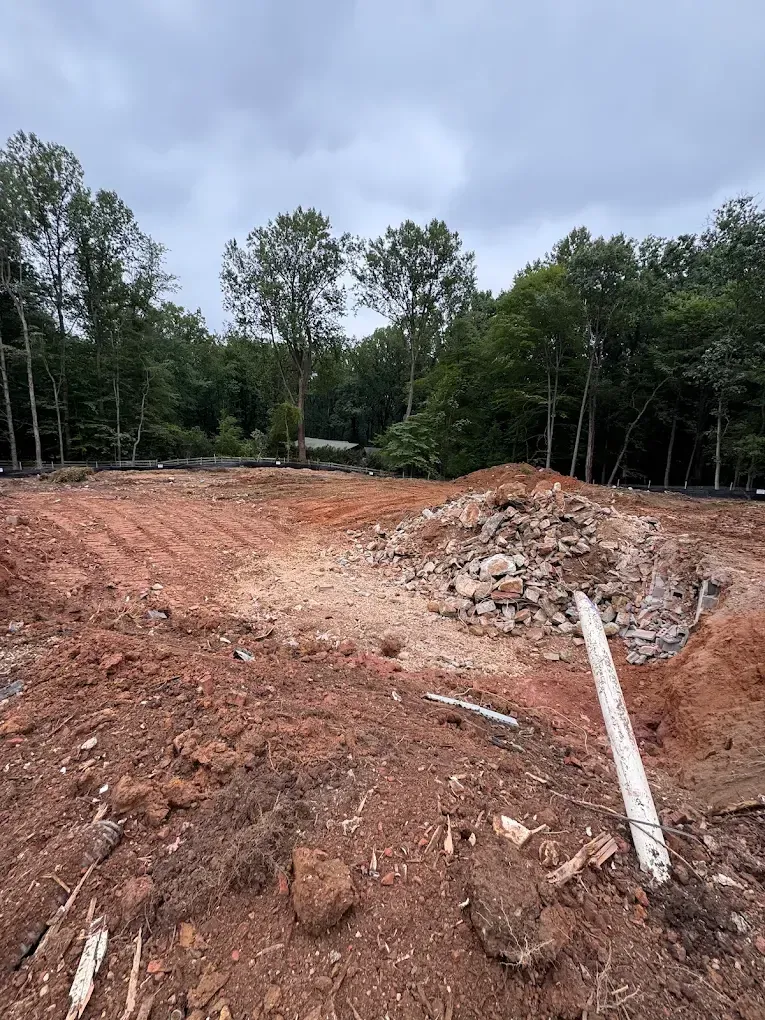
What You Notice Once Land Clearing Is Finished
Land clearing begins with identifying which vegetation must be removed to meet the project's needs and which features should remain for buffers, erosion control, or aesthetic reasons. Equipment choice depends on tree size, root systems, terrain steepness, and whether stumps need grinding or full removal. Northern Virginia's wooded parcels often include mixed hardwoods with deep root systems, which require different approaches than smaller brush or softwood stands.
Once clearing is complete, the property transforms from obstructed or overgrown ground into an open, accessible work area. Equipment can reach all portions of the site, grades are visible for surveying or excavation planning, and construction can proceed without delays caused by vegetation or hidden obstacles. Debris is removed from the property, leaving cleared ground ready for grading, excavation, or utility work.
Land clearing includes vegetation and debris removal but does not automatically include grading, erosion control installation, or stump grinding below grade unless those elements are part of the agreed scope. Site conditions may require additional erosion management if clearing occurs on slopes or near waterways.
Common Questions About This Service
Land clearing varies based on property conditions and project goals, so understanding the process helps clarify what happens on-site and what the cleared property will look like.
What determines the land clearing approach for a property?
Tree density, terrain slope, root systems, site access, and the intended use of the cleared land all influence how vegetation is removed and whether stumps require grinding or full extraction.
How are trees and debris removed during land clearing?
Trees are typically cut, sectioned, and hauled off-site, with stumps either ground down or removed entirely depending on the project requirements and whether grading or construction will follow immediately.
What happens to the cleared material?
Vegetation and debris are usually hauled off-site to disposal facilities, with options for recycling wood or mulching material depending on the volume and project scope.
When should land clearing be scheduled relative to other site work?
Clearing typically happens first, before excavation, grading, or utility installation, ensuring the site is accessible and workable for subsequent phases, particularly across Northern Virginia's wooded and developing properties.
What site preparation is needed before land clearing begins?
Property boundaries should be marked, protected features identified, and access routes confirmed so equipment can operate efficiently and vegetation removal stays within the intended clearing limits.
JM Excavating completes land clearing with attention to site access and the next construction phase so your property transitions smoothly from overgrown ground to workable space. Arrange an on-site consultation to review vegetation, terrain, and clearing requirements.