Pathways Dug for Underground Water Lines
Wet Utility Trenching in Stafford for new construction, property improvements, and utility installations requiring accurate excavation for water and sewer connections
Underground water and sewer lines require trenches that follow specific routes, meet depth requirements, and avoid damaging existing site features or utilities. Wet utility trenching creates those pathways so plumbers and utility crews can install lines correctly and the property can connect to water and sewer systems. JM Excavating provides wet utility trenching across Stafford, Bealeton, Culpeper, Warrenton, Fredericksburg, Great Falls, Manassas, Opal, Woodbridge, Winchester, Fairfax, and Arlington, coordinating trench routes, depth specifications, site access, and the surrounding construction schedule before excavation begins. Northern Virginia's combination of new construction, property improvements, and utility expansion projects means trenching must often navigate existing landscaping, driveways, and infrastructure without disrupting what remains.
Trenching involves excavating a pathway that matches the required depth and width for the utility lines being installed, with attention to slope for sewer lines and bedding material for water lines. The trench must remain stable during utility installation and ready for proper backfill once lines are in place and inspected.
Discuss trenching requirements and the broader site plan to coordinate excavation with utility installation and other project phases.
What Wet Utility Trenching Actually Accomplishes
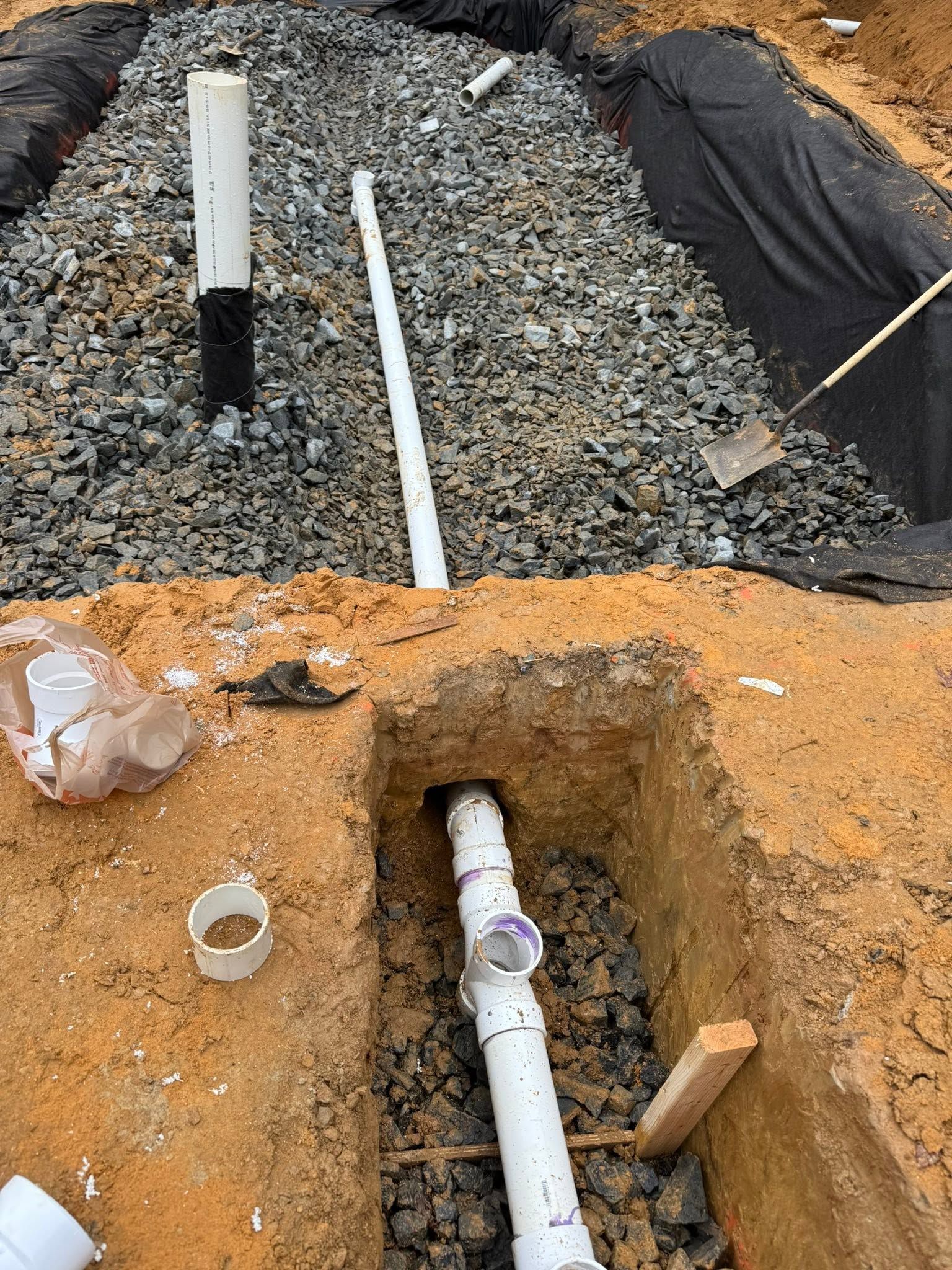
Trenching begins with marking utility routes based on engineering plans, locating existing underground infrastructure, and confirming depth and width requirements before digging starts. Equipment selection depends on trench length, soil conditions, and site access—compact trenchers work well in tight residential spaces, while larger excavators handle longer runs or rocky soil. The trench must maintain consistent depth and slope for sewer lines, and bedding material is often placed before utility crews install pipes.
Once trenching is complete and utilities are installed, the trench is backfilled with appropriate material, compacted to prevent settling, and graded to match the surrounding surface. What remains is an underground pathway that supports water and sewer connections without visible disruption to driveways, yards, or landscaping once final restoration is complete. JM Excavating coordinates trenching with utility installation timelines to keep projects moving without delays caused by excavation.
Wet utility trenching includes excavation and backfill but does not include utility line installation, connection to municipal systems, or final surface restoration such as re-sodding or repaving unless those elements are part of the agreed project scope. Coordination with utility providers and inspectors is typically required before backfill proceeds.
Questions Before Starting Your Project
Wet utility trenching involves coordination with utility installation and broader site work, so understanding the process helps clarify timelines and site impact.
What determines the trench route and depth for wet utilities?
Engineering plans, local utility codes, connection points to existing systems, and the property's topography all dictate where trenches run and how deep they must be, particularly for sewer lines that require consistent slope for gravity flow.
How is trenching coordinated with utility installation?
Trenches are excavated according to the project schedule, with utility crews installing lines once depth and bedding are confirmed, followed by inspection and backfill to restore the site and protect installed infrastructure.
What site preparation is needed before trenching begins?
Utility locations should be marked, access routes confirmed, and trench routes cleared of obstructions so excavation proceeds efficiently without damaging existing underground infrastructure or surface improvements.
What soil conditions affect wet utility trenching in Stafford and Northern Virginia?
Clay-heavy soils, rocky substrates, and high groundwater levels all influence excavation methods, equipment selection, and whether trench stabilization or dewatering is required during utility installation.
When should wet utility trenching happen relative to other construction phases?
Trenching typically occurs after site clearing and rough grading but before final grading, driveways, and landscaping are completed, ensuring utilities are in place without requiring rework of finished site features.
JM Excavating completes wet utility trenching with attention to depth requirements, site coordination, and timely backfill so utility installation proceeds smoothly. Reach out to JM Excavating at (703) 595-9324 to outline trenching needs and coordinate with your project schedule.