Ground Transformed Into Workable Construction Areas
Site Preparation in Culpeper for residential, rural, and developing properties requiring coordinated earthwork
Raw or overgrown ground must be cleared, graded, and prepared before construction or property improvements can proceed, which involves removing obstacles, establishing access, and shaping the site to match the finished project's drainage and elevation requirements. Site preparation turns unusable land into a functional work area where builders, equipment, and materials can move safely without damaging surrounding areas or creating erosion problems that delay the project. Northern Virginia's residential and rural sites often include wooded areas, slopes, and existing structures that require deliberate planning before any excavation or clearing begins.
JM Excavating coordinates site preparation by evaluating the property's current condition, identifying drainage patterns that will affect the finished project, and sequencing the work to address clearing, grading, and foundation prep in the order that best supports the construction timeline. Each site presents different challenges depending on terrain, vegetation, and access limitations, so the preparation approach adjusts to match the specific project rather than following a single process for every property.
Schedule a site assessment to review your property's current condition and discuss the earthwork needed before construction starts.
What Changes After Clearing and Grading Are Completed
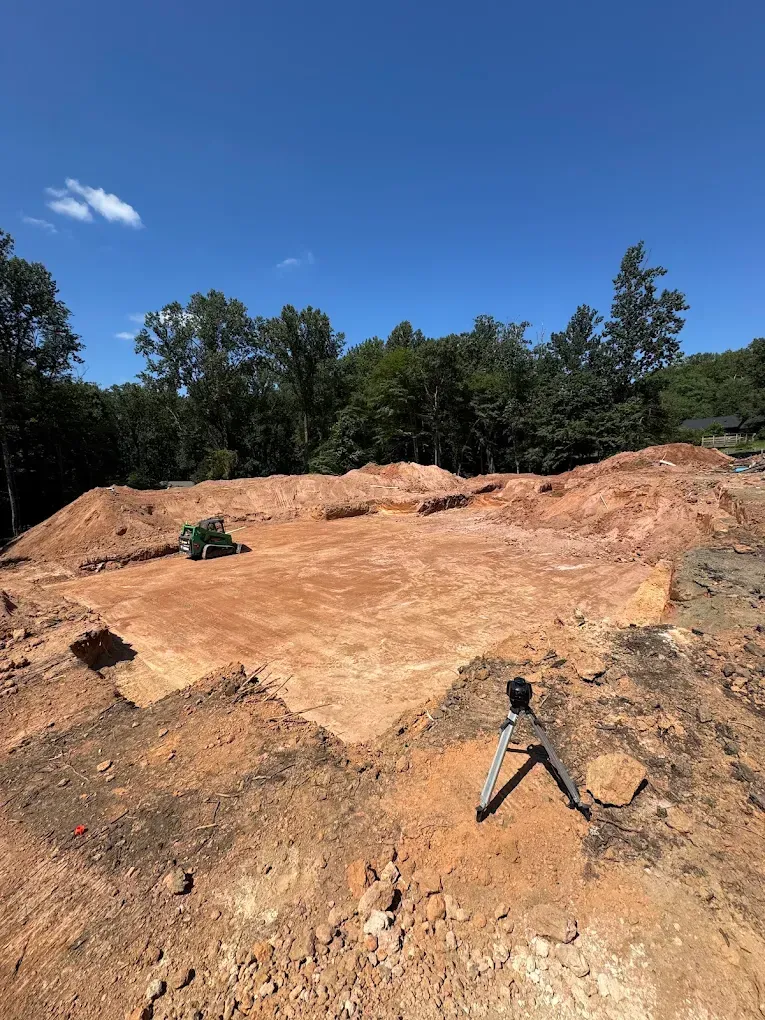
Clearing removes trees, brush, stumps, and debris from the work area, while grading establishes the elevations and slopes that determine where water moves once construction is finished. Together, these steps create a stable surface where construction equipment can operate without sinking into soft ground or compacting areas that need to remain undisturbed for future landscaping or drainage features.
Once clearing and grading are complete, you'll notice defined work zones with stable ground that supports vehicle traffic, clear sight lines across the property, and drainage paths that direct runoff away from the building area instead of allowing water to pool where foundations or driveways will be installed. The site transitions from overgrown or uneven ground to a construction-ready area with access paths and elevations that match the project plan.
Site preparation may also include excavation for utilities, demolition of existing structures, or installation of temporary access roads depending on the project scope, but these tasks are planned around the construction sequence to avoid rework or delays caused by equipment moving across finished areas.
Common Questions About This Service
Site preparation varies widely depending on property conditions and project requirements, and the following questions address the planning and sequencing details that affect how earthwork integrates with construction schedules.
What does site preparation include?
Site preparation typically includes clearing vegetation and debris, establishing access for construction equipment, grading the work area to the required elevations, and addressing drainage considerations that affect the building area and surrounding property.
How does grading affect the finished project?
Grading establishes the slopes and elevations that control water movement across the property, which prevents erosion around structures and ensures driveways, foundations, and landscaping areas drain correctly once construction is complete.
When should site preparation begin?
Preparation is typically scheduled before construction contracts are finalized so builders can verify that the site is accessible and ready for foundation work, which prevents delays caused by unexpected ground conditions or access limitations discovered after the project starts.
Why do some properties in Culpeper require drainage work during site prep?
Clay-heavy soils common in Northern Virginia retain water and can create saturated ground that destabilizes construction areas, so drainage features like swales or grading adjustments are incorporated during preparation to keep the work area stable throughout the project.
What happens to cleared trees and debris?
Cleared material is typically removed from the site or processed on-site if space allows, with stumps ground below grade and organic debris either hauled away or repurposed as erosion control depending on the property owner's preferences and project requirements.
JM Excavating plans site preparation around the finished project's requirements, coordinating clearing, grading, and access work to support construction timelines across Northern Virginia properties. Contact the team to discuss your site conditions and project schedule.