Structures Removed to Clear the Way
Demolition in Culpeper for properties transitioning from existing structures to new construction or expanded usable ground
Unwanted buildings, deteriorated additions, abandoned outbuildings, and obsolete site features prevent properties from moving forward with redevelopment or improvement plans. Demolition addresses that by removing what's no longer needed so the property can enter its next phase. JM Excavating handles demolition throughout Culpeper, Bealeton, Warrenton, Fredericksburg, Stafford, Great Falls, Manassas, Opal, Woodbridge, Winchester, Fairfax, and Arlington, evaluating access for equipment, proximity to structures that remain, debris handling logistics, and the intended use of the cleared area before removal begins.
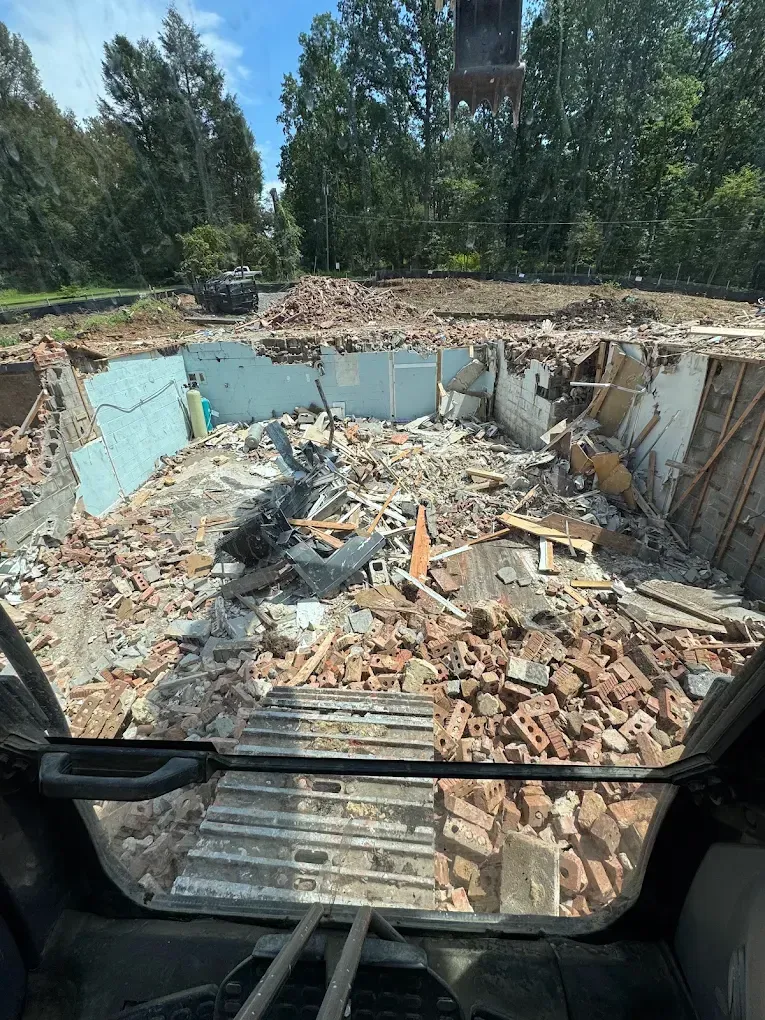
The work involves dismantling or tearing down the structure, separating materials as needed for disposal or recycling, and clearing the site so it's ready for grading, excavation, or construction. Demolition planning considers what surrounds the removal area—nearby utilities, landscaping, driveways, and adjacent buildings—so the work proceeds without affecting improvements that stay.
Discuss the structure and project goals to outline demolition requirements and site preparation needs.
How Demolition Addresses Site Transition Needs
Demolition begins with understanding what's being removed, what materials require special handling, and how debris will leave the property. Equipment and methods vary depending on structure size, material composition, and site constraints—a small shed is removed differently than a multi-room building with a foundation. Northern Virginia's mix of older rural structures and suburban redevelopment projects means demolition often involves coordination with local regulations and disposal requirements.
After demolition, the property is cleared of structural debris, with foundations removed if required and the site graded to match surrounding elevations. What remains is open, workable ground ready for the next phase, whether that's new construction, landscaping, or simply reclaiming usable yard space.
Demolition includes structure removal and debris hauling, but site restoration, utility disconnection, and environmental remediation typically require separate coordination unless those elements are specified in the project scope. The timeline depends on structure size, material handling requirements, and access conditions.
Answers to Frequent Service Questions
Understanding what demolition involves and how the work is coordinated helps property owners prepare for the transition from removal to the next site phase.
What preparation is needed before demolition begins?
Utilities should be disconnected, permits obtained if required, and access routes confirmed so equipment can reach the structure and debris can be hauled away without obstruction.
How is debris handled during demolition work?
Debris is typically loaded and hauled off-site to appropriate disposal or recycling facilities, with material separation performed as needed based on disposal regulations and project requirements.
What happens to the foundation after a structure is removed?
Foundations can be broken up and removed entirely, partially removed to grade level, or left in place depending on the planned use of the site and local requirements, particularly across redevelopment projects in Northern Virginia.
When is demolition typically scheduled in a property improvement project?
Demolition usually happens before excavation, grading, or new construction begins, ensuring the site is cleared and ready for the next phase without delays or obstructions.
What factors affect how long demolition takes?
Structure size, material composition, foundation depth, debris volume, and site access all influence the demolition timeline and equipment requirements.
JM Excavating coordinates demolition with the broader property improvement plan to transition smoothly from removal to site preparation. Contact JM Excavating to review the structure and outline demolition requirements for your property.