Water Managed Before It Becomes a Problem
Drainage Solutions in Fredericksburg for properties where surface water collects, slopes fail to direct runoff, or low areas stay saturated after rain
When surface water pools around foundations, floods driveways, or turns yards into mud after every storm, the issue is rarely the amount of rain—it's where that water goes once it hits the ground. JM Excavating addresses drainage problems across Fredericksburg, Bealeton, Culpeper, Warrenton, Stafford, Great Falls, Manassas, Opal, Woodbridge, Winchester, Fairfax, and Arlington by evaluating slope, runoff paths, low areas, and the locations where water collects before determining the appropriate solution. Northern Virginia's rainfall patterns and varied terrain mean many developed properties experience drainage issues where grading no longer directs water away from improved areas.
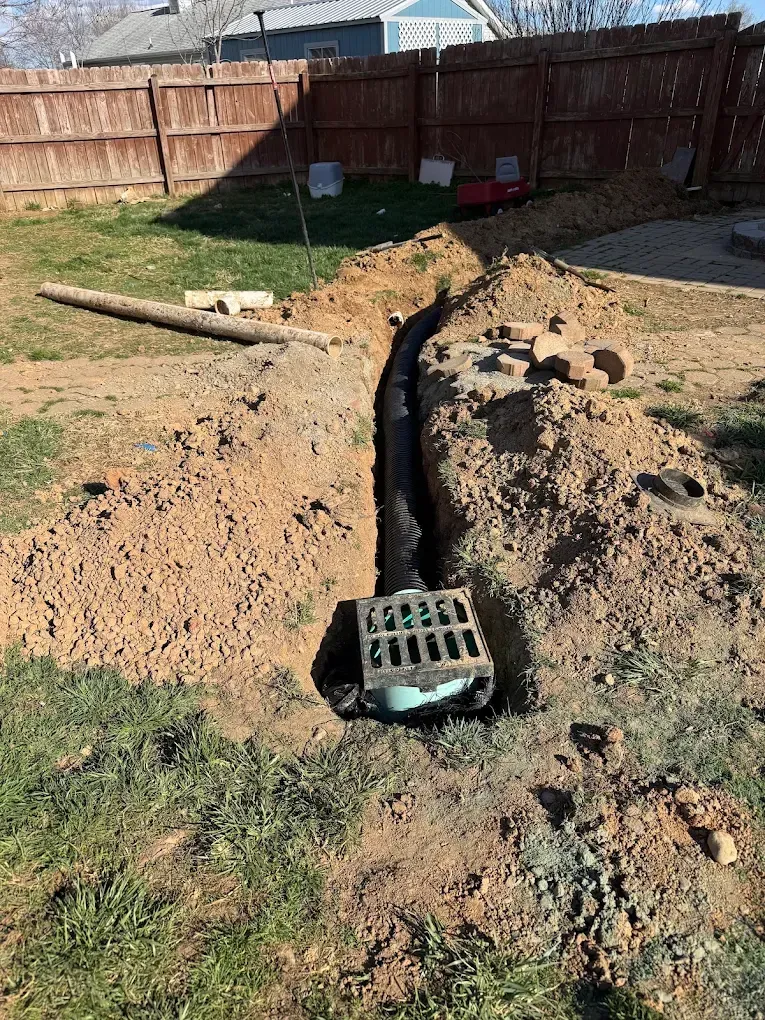
Drainage work involves reshaping grades, installing surface channels, or creating subsurface pathways that direct water away from vulnerable areas and toward locations where it can disperse or be captured. The approach depends on how much water moves across the site, where it's coming from, and what the property's existing topography allows.
Schedule an on-site drainage evaluation to identify runoff paths, low areas, and the most effective approach for your property.
Why Proper Drainage Works for Developed Properties
Drainage solutions begin with tracing where water travels during and after rain—uphill sources, flow paths across paved or graded areas, and the spots where it slows or stops. Corrections may include regrading to create positive slope away from structures, installing swales or channels to guide surface flow, or adding subsurface drainage where water needs to move through rather than across the ground. Clay-heavy soils common in Northern Virginia slow water absorption, which means surface management becomes critical for preventing pooling and erosion.
After drainage work is complete, water moves away from foundations, driveways dry faster, and low areas no longer hold standing water for days after storms. What you notice is the absence of the problem—no more pooling near entries, no more saturated ground that prevents yard use, and no more runoff cutting channels across graded areas.
Drainage solutions address water movement and collection on the property but do not replace erosion control, stormwater infrastructure required by local regulations, or repairs to structures already damaged by water intrusion. Some sites require permits or coordination with local stormwater management requirements, particularly in developing areas.
What Property Owners Usually Ask
Drainage problems show up differently depending on property layout and rainfall patterns, so understanding the evaluation and correction process helps clarify what changes after the work is done.
What causes drainage problems on developed properties?
Grading that no longer directs water away from structures, compacted soil that prevents absorption, low areas where runoff collects, and inadequate pathways for water to leave the property all contribute to drainage issues, particularly after construction or landscaping changes the original site grades.
How is the drainage approach determined for a property?
Site evaluation traces where water originates, how it moves across the property, and where it collects or causes problems, then identifies whether surface regrading, channels, or subsurface drainage will manage the flow most effectively.
What changes after drainage solutions are installed?
Water moves away from structures and paved areas, low spots dry out faster after rain, and usable portions of the property remain accessible rather than turning into mud or holding standing water for extended periods.
When is the best time to address drainage issues?
Drainage work can proceed year-round, though scheduling after wet periods allows for observation of actual flow patterns, and completing work before seasonal rains prevents continued damage to foundations, driveways, and landscaping across Fredericksburg and surrounding areas.
What maintenance do drainage solutions require?
Surface channels and swales should remain clear of debris and sediment, and grades should be monitored to ensure settling or erosion hasn't redirected flow back toward problem areas.
JM Excavating evaluates drainage problems based on site-specific conditions and installs solutions that direct water away from vulnerable areas. Call (703) 595-9324 to arrange a property evaluation and discuss drainage correction options.