Underground Systems That Stop Failing Quietly
Water system repair in Bealeton for properties with failing supply lines, drainage faults, or storm system damage
Rural and semi-rural properties in Fauquier County—particularly in areas like Bealeton where development spans several decades of construction—commonly rely on private water systems, aging sewer laterals, and storm drainage infrastructure installed well before modern inspection standards. JM Excavating works on these underground systems directly, handling water system repair, sewer repair, and storm system repair for property owners dealing with pressure loss, sewage backups, or surface flooding that points to buried line failure.
Water system repair begins with locating the fault—whether that is a broken supply line, a failed joint in a sewer lateral, or a collapsed storm pipe—before any excavation begins. Older properties in this area were often served by galvanized or early PVC lines that have reached the end of their service life, and the repair approach depends on the pipe material, burial depth, and proximity to septic fields or drainage easements. Work is scoped to address the specific failure point rather than open unnecessary trench runs across the property.
Request an on-site assessment to identify which system is involved and what the repair scope requires.
How Underground Pipe Failures Get Located and Fixed
Diagnosing an underground system failure involves more than digging toward the symptom. A pressure drop in a supply line, sewage surfacing near the yard, or standing water above a storm pipe all point to different failure types that require different repair methods. The process starts with tracing the line and identifying the failure zone—using the visible symptoms, system layout, and in some cases inspection equipment—before equipment is brought in for excavation.
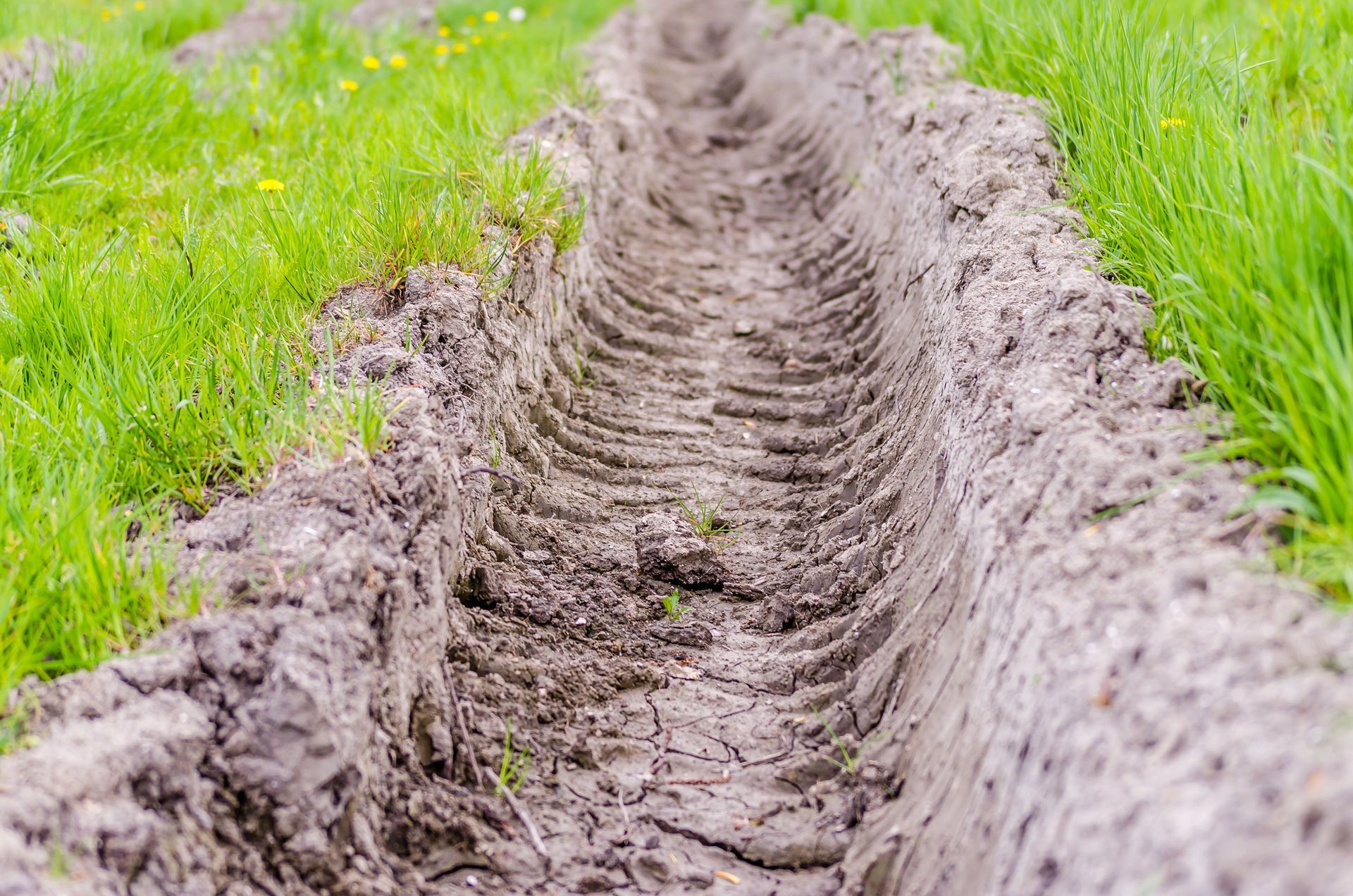
Once the repair site is opened, what you will notice immediately is whether the surrounding material—soil density, existing bedding, and nearby utility crossings—allows for a direct repair or requires a short section of line replacement. After work is completed, the observable change is straightforward: water pressure returns, sewage stops surfacing, or drainage clears and the ground above the pipe no longer saturates after rain. The trench is backfilled and compacted in lifts to prevent settling, which is a step that matters particularly on driveways or lawns where surface grade must be restored.
The repair scope on any underground system also depends on what other infrastructure runs nearby. Properties with private septic systems, well lines, and storm drainage in close proximity—common on rural Bealeton parcels—require careful sequencing to avoid disturbing lines that are functioning correctly while accessing the one that is not.
What Property Owners Ask About This Work
Underground system repairs raise practical questions about the process, what gets disturbed, and what the finished work should look like. The answers below address how this type of repair is actually performed.
What tells you which underground system is causing the problem?
The failure type narrows it quickly—pressure loss or discolored water points to the supply line, sewage odor or wet spots above the lateral indicate a sewer issue, and surface ponding near a drainage outlet suggests a storm pipe fault. Each symptom points to a different system and a different repair approach.
How is the failed section of pipe located before excavation starts?
Line routing is traced from accessible points—cleanouts, meter pits, or outlet ends—and the failure zone is identified by symptom location, system layout, and inspection where access allows. Unnecessary excavation is avoided by narrowing the dig zone before equipment moves in.
What pipe materials are typically used in repairs on older rural properties?
Repair sections are matched to the existing system requirements and current code standards for the application—sewer laterals, water supply lines, and storm pipes each have appropriate material specifications that differ from one another.
Why does backfill compaction matter once the pipe is repaired?
Loose backfill settles unevenly over time, which can stress the repaired joint, crack surface paving, or leave a visible depression across a lawn or driveway. Compacting in lifts restores the surrounding ground to a stable condition that holds.
How do properties in Bealeton with both well and septic systems affect how repair work is sequenced?
When a water supply line and a septic lateral run near each other—as they often do on rural parcels here—the repair has to be sequenced so excavation on one system does not disturb or contaminate the other, which affects where equipment enters and how deep each trench is opened.
JM Excavating performs water system repair, sewer repair, and storm system repair on properties throughout Bealeton. To discuss the specific symptoms you are seeing and what an inspection of your system would involve, contact JM Excavating directly to arrange a property visit.